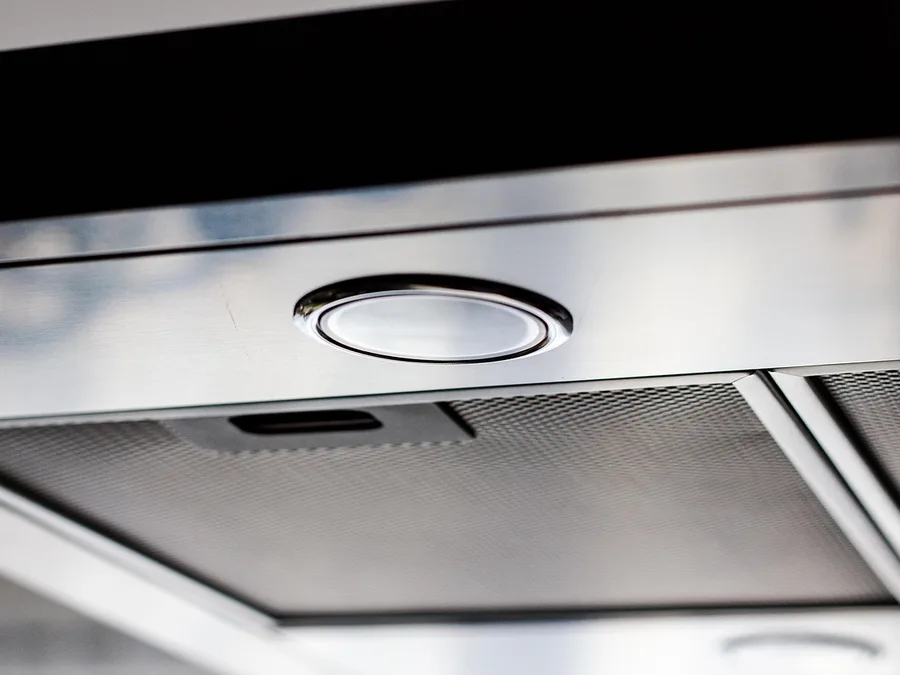
The shortest-lived appliance near the water
A rangehood gets grease and steam from the cooktop below and, in kitchens close to the beach, salt from the air coming in through the windows. That combination is hard on motors, fans and switches, and on the stainless steel itself. Around Shellharbour village, Barrack Point and Warilla we see hoods that are rusted at the screws and grilles well before the motor gives up.
What goes wrong
- Motor seized or grinding. Bearings worn by grease and heat. A hood that hums but will not spin, or spins only on its highest setting, usually needs a new motor.
- Weak extraction. Clogged filters, a failing motor, or a blocked or crushed duct.
- No power or lights. A switch panel, a control board, or wiring corroded by moisture.
- Rattles and vibration. A loose fan, a damaged blade, or a duct that has come away.
We wrote a longer post about a rangehood motor that has seized.
Look after the filters
Most rangehood faults start with the filters. Wash metal filters every month or two, more often if you fry a lot. Replace charcoal filters on recirculating hoods as the manual says. Wipe the stainless with the grain using a little detergent, and dry it, because salt left sitting on it is what starts the rust spots. Our note on rust spots on coastal stainless steel has more.
Booking
Give us the brand and model number, which is usually on a label inside the hood once the filters are out. The fixed $125 assessment covers the visit and the diagnosis, and the repair is quoted before any work starts.