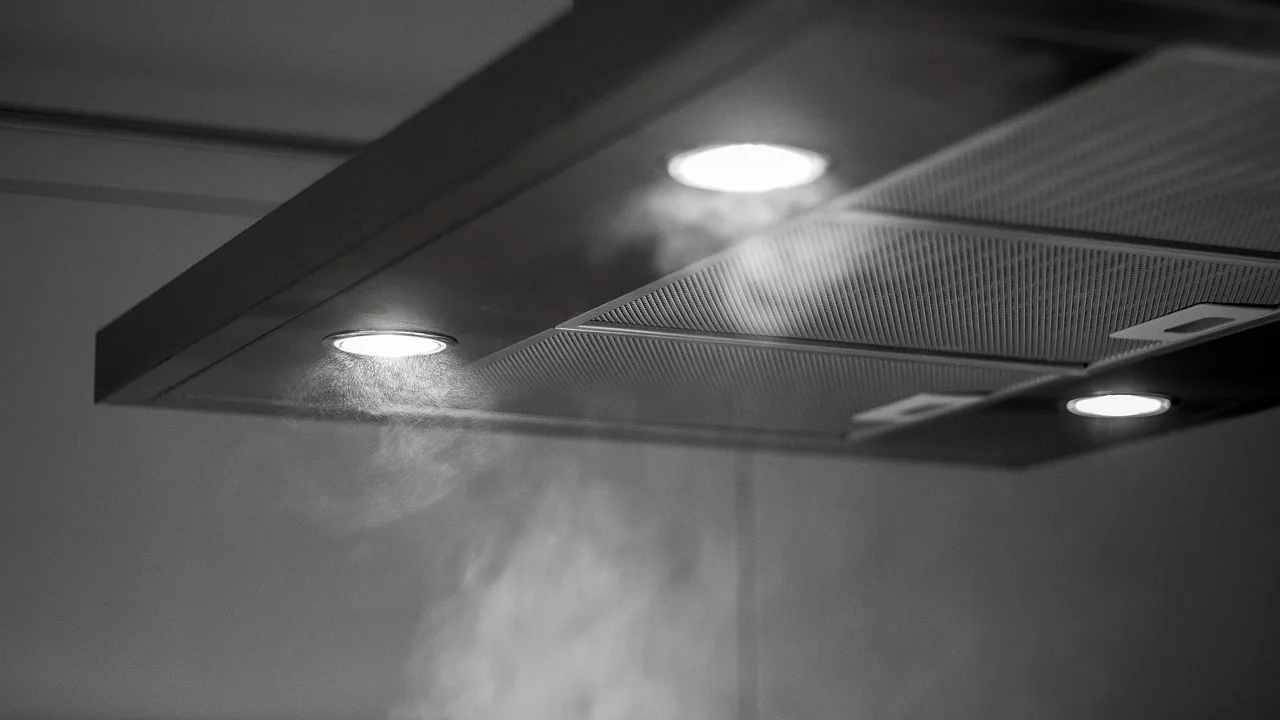
Of everything in a kitchen, the rangehood gets the worst deal. It's the only appliance being attacked from both sides — grease and steam from below, salt-laden air from the duct above — and it's the one nobody thinks about until it stops.
In the streets closest to the water it's routinely the first appliance in the kitchen to fail, well before the oven or the dishwasher.
Is it actually broken?
Before assuming the motor has gone, work out which of three things you've got.
No noise at all when you press the switch. That's electrical — the switch, the wiring, or a seized motor that can't start. Turn it off at the wall and leave it there.
A hum but no fan movement. Classic seized motor, or a fan wheel so caked that the motor can't overcome it. This one is often recoverable.
Plenty of noise, no extraction. The motor's fine. It's the filters, or the duct.
The one that's fixable in an afternoon
The third case is the most common and it isn't a repair at all.
Take the metal mesh filters out. If yours are aluminium mesh, they go in the dishwasher on a hot cycle, or in the sink with hot water and a good degreaser. If they're charcoal filters in a recirculating hood, they don't clean — they're consumables and they need replacing, usually every six to twelve months.
Then look at the fan wheel behind the filters with a torch. If the blades have a brown-black crust on them, that crust is both restricting airflow and unbalancing the wheel. Degreasing it makes a difference you can hear.
Finally, if it's a ducted hood, check where the duct goes. We've found ducts terminating in a roof cavity more than once, which recirculates warm greasy air back into the house and does nothing for the kitchen. It also means the hood works permanently against a restricted path.
Why coastal kitchens are harder on them
Two mechanisms, and they compound.
Grease deposits on the fan wheel and the motor housing from the cooking side. That's universal — every rangehood everywhere does it.
What's specific to Shellharbour, Warilla and the beach streets is what comes back the other way. A ducted hood is a hole in your roofline, and salt-laden air moves through it whenever the hood is off. That salt settles on the same greasy surfaces, and the mixture corrodes the motor housing and the mounting brackets from the inside out.
It's why we replace rangehood motors in beachside suburbs at a rate we simply don't see three or four kilometres inland.
When it's a motor
If the wheel is clean, turns freely by hand and the hood still hums without moving, the motor is the part. On most brands it's an available part and a reasonable repair, particularly on integrated and undermount hoods where replacing the whole unit means pulling cabinetry apart.
The exception is a canopy hood where the housing itself has corroded through. At that point the mounting points aren't sound and a new motor is going into something that won't hold it.
We repair Smeg, Omega, Bosch and Electrolux hoods most often around here — those four cover most Illawarra kitchens.
Making it last
Wash the mesh filters monthly if you cook with oil regularly, quarterly otherwise. Replace charcoal filters on schedule rather than when the smell gets bad. Run the hood for a few minutes after you finish cooking so it clears the moisture rather than leaving it to condense on the wheel.
And if it's ducted, once a year check the external vent flap actually closes. A flap propped open by a leaf is an open invitation for salt air, and it's the cheapest fix on this whole page.
If it's past that point, the assessment fee is $125, fixed, and you'll get the repair price before any work starts. Book a repair or ring 02 4229 3777.