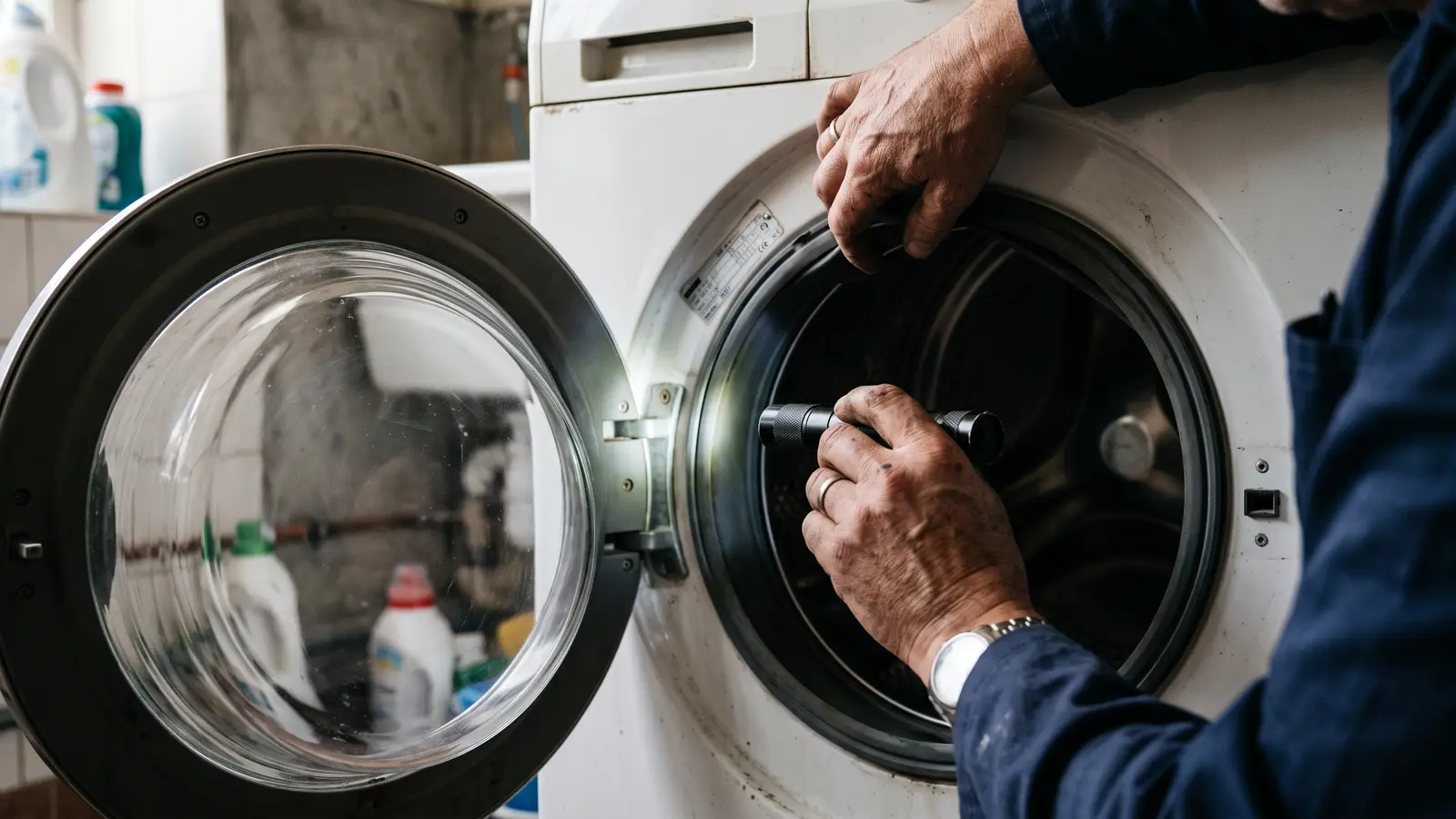
We ask for the model number on every call before we ask what the appliance is doing, because it decides three things the symptom on its own can't: which parts actually fit, what a fault code means on that version of the machine, and which known issues apply to it.
The same complaint on two machines of the same type, sitting a few years apart in age, can point at completely different repairs. A rumbling washing machine on one model is a bearing job that takes an hour. On another it's a sealed drum assembly that costs most of what the machine is worth. Nothing about how the fault sounds tells us which one we're looking at. The plate does.
Where to actually find it
It's rarely where people expect, and it's almost never on the front.
On a washing machine or dishwasher, check the rim behind the door, run your eye around the edge where the door seal sits. On a fridge or freezer, it's usually inside the cabinet, on a side wall or the underside of a shelf, though some put it on the back near the compressor. On an oven, look inside the door frame or on the cavity wall, sometimes behind a drawer underneath. On a dryer, it's typically behind the door too, on the rim or just inside the drum opening. On a rangehood, it's inside the canopy, behind the grease filters.
A phone camera with the flash on is the easiest way to read one. The print is small, often worn faint by cleaning, and it's usually not where the brand's main badge is.
Why it changes the quote more than the symptom does
Two machines wearing the same badge can be entirely different jobs underneath, because it isn't unusual for a manufacturer to change what's inside partway through a model's production run without changing the name on the front. We see it a lot on Bosch, where the parts under the badge have shifted more than once. A quote worked out from the fault alone, without knowing which version is sitting in the laundry, is a guess with a dollar figure attached to it, and we'd rather ask the extra question than give you a number we have to walk back at the door.
The part that decides whether it's worth fixing at all
Age on its own doesn't tell you much. A simple, mechanical appliance can go for decades. What matters is whether the part that's failed is still made, and that's a question the model number answers and a birth year doesn't.
A control board or a proprietary display module for a model that's been discontinued for years is sometimes not orderable at any price, which turns a fault that would otherwise be a routine job into a straight replacement conversation. We've gone into the fuller version of that trade-off in repair or replace, and it's the same question we ask when checking a second-hand machine before you buy it: if the expensive part fails, can anyone actually get one.
What the law expects on parts
Under the consumer guarantees that come with anything you buy new in Australia, manufacturers and retailers are expected to have spare parts and repair facilities available for a reasonable time after purchase, unless you were told otherwise at the point of sale. There's no fixed number of years attached to that, and it varies a lot by product and manufacturer, but it's worth knowing if a retailer or a brand tells you a part simply isn't available for a machine that isn't old.
For us it's more practical than legal. If the part exists, we'll quote it. If it's been unavailable for a while, we'll tell you that at the assessment rather than order something on the chance it turns up.
What to have ready when you call
The model number is the first thing, ideally read straight off the plate rather than off a purchase receipt, because the two don't always match on machines sold under more than one code. After that, what the fault does and whether it happens on every cycle or only sometimes changes what gets packed on the van.
We cover Shellharbour City and the lake suburbs, domestic appliances only. Coming out to assess it is $125, payable either way, and any repair is quoted before we start and warranted afterwards. Book online or call 02 4229 3777 with the model number in hand if you can find it. It's the fastest way to get an accurate quote before anyone drives out.