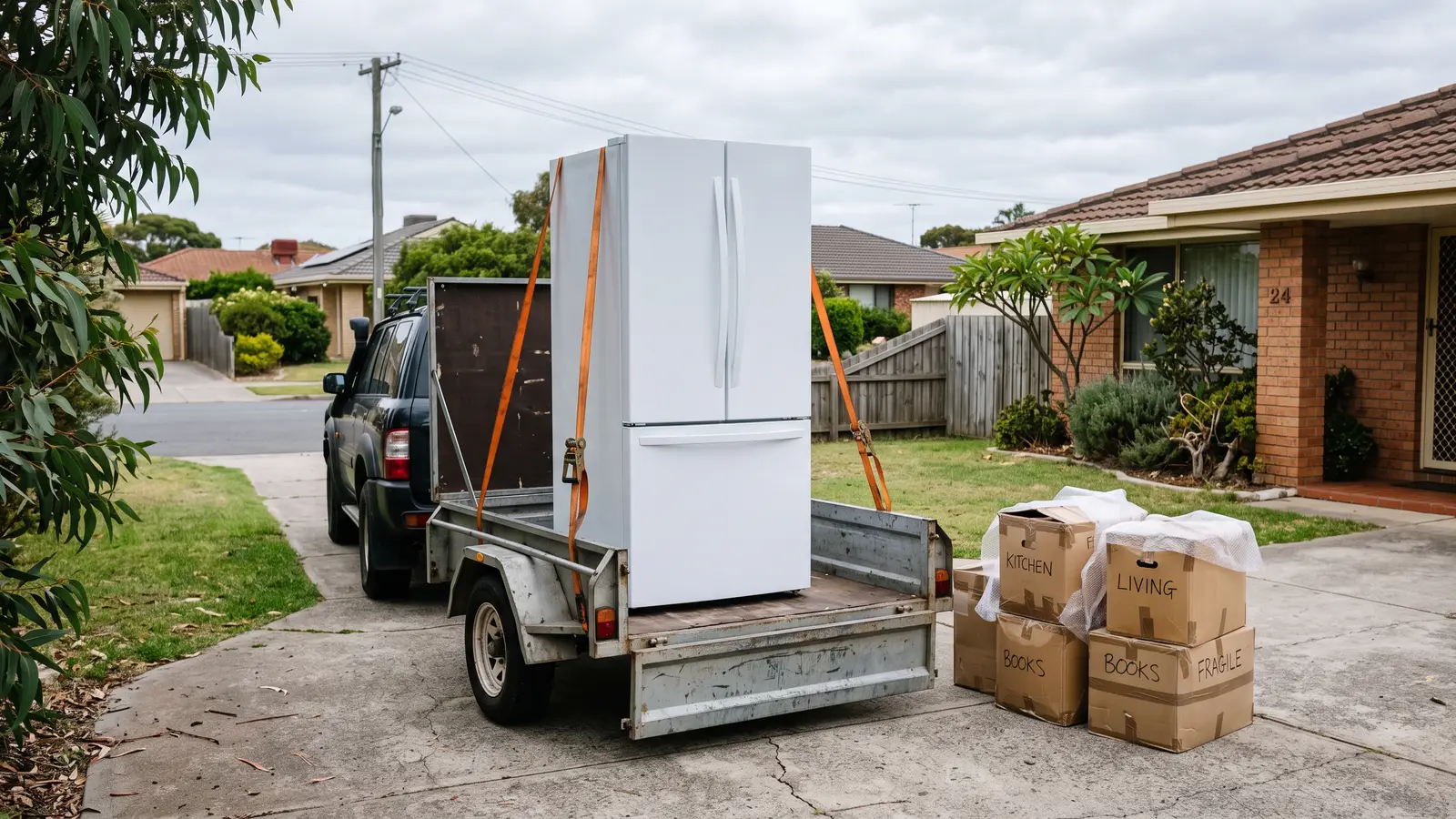
A family moving into Calderwood rang me on a Sunday afternoon, two days into the new house, convinced the removalists had wrecked their fridge. Four years old, French door, worked perfectly in the old place at Oak Flats. It had gone into a trailer on its back on the Saturday, come out again that evening, and been plugged straight in so the kids could have milk in the morning.
By lunchtime Sunday the freezer was soft and the fridge side was sitting at about twelve degrees. It was running. It just wasn't getting cold.
I didn't go out. I told them to pull the plug, leave it standing where it was, and ring me on Tuesday if it still wasn't cold. They didn't ring back. I chased them up a fortnight later out of curiosity and it had come good overnight.
That call happens a lot around here, and it clusters. Calderwood, Tullimbar, the newer end of Shell Cove and Flinders are still filling up with people moving in, and half of Shellharbour seems to turn over its weekenders every couple of years. So I get a run of them, always on a weekend, always someone who has just paid a removalist and is now looking at a warm fridge.
What actually moves when you lay one down
The bit that matters is the compressor, the black pod bolted to the back at the bottom. It is a sealed steel can with a pump inside it, and sitting in the bottom of that can is a reservoir of oil that keeps the pump alive.
Stand the fridge up and the oil stays in the bottom where it belongs. Lay the fridge over and the oil does what oil does. It runs out of the sump and into the pipework leaving the compressor, which is the discharge line heading off to the condenser coils.
Now plug it in. Two things go wrong at once. The pump is running with less oil than it was designed to have, and there is oil sitting in narrow tubing that was only ever meant to carry gas. That oil is in the way. The refrigerant can't circulate properly past it, so the fridge runs, sounds completely normal, and produces very little cold.
Stand it back up and the oil drains home under its own weight. That is the whole repair, and it costs nothing but patience.
Choice put it more simply than I just did. Their advice is that keeping a fridge upright keeps the refrigerant where it belongs, and that if you have leaned one over too far or laid it down, you have to wait for things to settle back before switching it on.
How long to leave it standing
Here is where I have to be straight with you: there is no single number, and anyone who gives you one confidently is guessing.
The common rule of thumb is to leave it upright for at least as long as it spent lying down. That is not a law of physics, but it is a sensible way to think about it and it has never let me down.
What I actually tell people is to leave it standing overnight, unplugged, and turn it on the next morning. If it was flat for two hours on a trailer, overnight is generous. If it travelled from Sydney on its back, give it a full day. The cost of waiting is a day of eating out of an esky. The cost of not waiting can be a compressor.
Check the manual if you still have it, because some manufacturers do put a figure in there and theirs beats mine. Most people don't have the manual, which is why the overnight answer exists.
Turn it off the day before, not on the day
The other half of this, and the half nobody does, happens before the truck arrives.
Switching a fridge off the day before a move gives the freezer time to defrost properly, so you are not carrying a block of ice that turns into a puddle in the back of someone's van. Choice makes the same point, and adds the one I care about more: it lets the oils and fluids inside settle instead of being sloshed around while the pump is still turning.
Defrost it, dry it out, and leave the doors open while it stands empty. A fridge that gets shut up damp and driven somewhere will smell when you open it at the other end, and that smell is a lot easier to prevent than to remove.
Take the shelves and the crisper bins out and wrap them separately. Glass shelves in a fridge that is being carried down a driveway will find a way to move, and a shelf that cracks in transit is a part order rather than a repair.
Carrying it
Try not to tip it back more than about 45 degrees on a trolley. Past that you are in the same territory as laying it flat, just briefly.
If you do have to lay it down, which with a ute or a box trailer you often do, two things are worth knowing. On its back is usually the safest option, provided the back panel is flat and there is nothing sticking out of it. Plenty of fridges have an exposed condenser grid or a fan housing back there, and putting the weight of the whole appliance onto that is how a pipe gets pinched.
If it has to go on its side, put the hinge side uppermost. Lay it hinge-side-down and gravity spends the whole trip trying to swing the door open.
Pad everything, strap it so it cannot slide, and if you are going any distance in a trailer, throw a tarp over it. Salt spray off Lake Illawarra and down the coast road is not kind to a bare fridge cabinet, and a fridge that gets wet on the way to the new house will have rust freckles by Christmas. I have written about what salt does to a stainless finish before.
The damage that is actually damage
Not everything is the oil. Sometimes the move genuinely breaks something, and these are the ones I do come out for.
A pinched or kinked pipe at the back is the bad one. If a fridge was rested on its condenser and something has flattened a tube, the refrigerant can't get round the circuit, and that is a sealed system repair rather than a wait. You can sometimes see it if you look at the back with a torch.
A door seal that has twisted or been caught on something is much more common and much cheaper. If the door doesn't pull itself shut the last centimetre any more, or you can see daylight along one edge, that is the seal sitting wrong. Sometimes it just needs warming and reseating.
Water lines to an ice maker or a chilled water tap get forgotten and then snapped off. Disconnect and drain those before the move if yours has one.
And the boring one: check it is actually switched on at the powerpoint and that the powerpoint works. I have driven to a house for that. More than once.
If it is still warm two days later
Give it a full day standing and plugged in before you decide anything. A fridge that has been emptied, moved and refilled with a week's shopping has a lot of work to do, and it will run hard and long for the first day in a way that worries people unnecessarily. That flat-out running is normal after a move and it should settle.
What is not normal is a fridge that has been standing for a day, running for a day, and is still not below about four degrees in the fresh food section. At that point the move has probably exposed something, or the new spot is the problem.
The new spot matters more than people think. A fridge that lived in a cool tiled kitchen and now lives in a garage or a west-facing alcove in a new build is in a different machine's job. I have written the long version of that in the garage fridge post, and if yours is running constantly in its new home without getting cold, start here instead — around this coast it is very often the condenser coils rather than anything that happened on moving day.
If you want me to look at it
We cover Shellharbour City and the suburbs around the lake, domestic appliances only. The visit is $125 whatever I find, and that is payable either way — including on the ones where the answer is that it needed another day standing up. Any repair gets a fixed price before I start, and what I repair is warranted.
If you are about to ring, wait the day first. Genuinely. It is the one call where the free answer works most of the time. If you have already waited and it is still warm, book it here or ring 02 4229 3777. Tell me whether it travelled flat, and roughly how long for — it changes what I expect before I arrive.